

Bay Area Pest Library
What did you find?
Start with what you actually saw. Each entry covers what it probably is, why it turned up, and whether it is the kind of thing that needs a technician.
Ten pests behind almost every call we get
Ranked by how often our technicians find them in Bay Area homes.

Ants
A line along a counter edge or baseboard. Usually Argentine ants, one connected colony.

Rodents
Noise in the attic after dark, droppings behind the stove, a chewed food box.

Spiders
Webbing on eaves and fence lines, or something large and brown moving across a floor.

Termites
Discarded wings on a sill, or pellets that look like coarse sand under a beam.
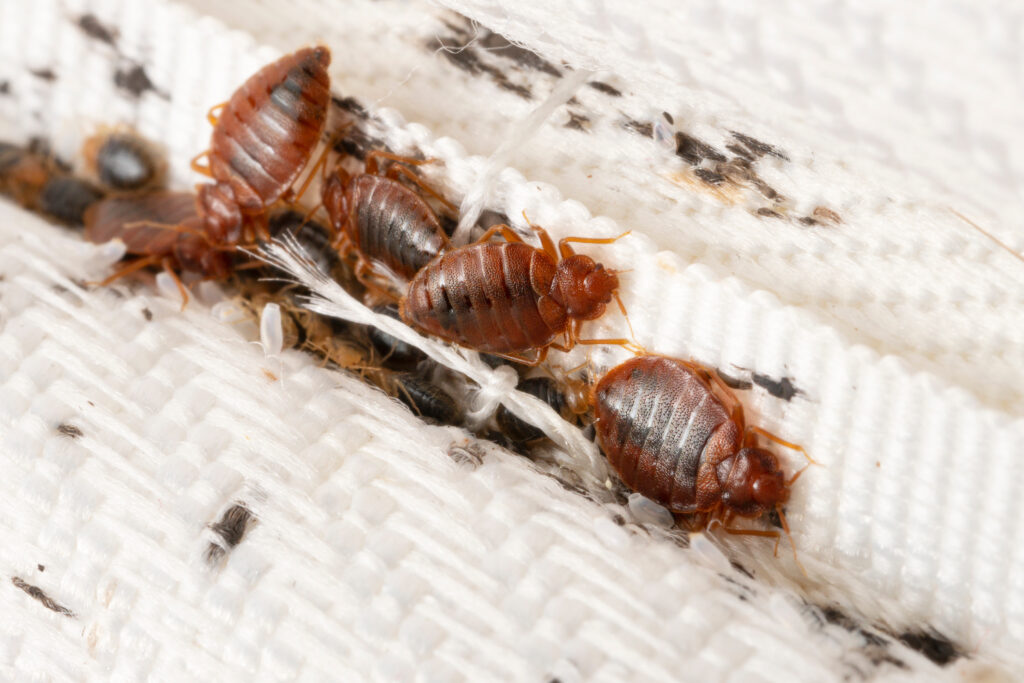
Bed bugs
Rust colored spotting along a mattress seam. More reliable than the bites.

Wasps and hornets
An umbrella shaped nest under an eave, or traffic in and out of a hole in the ground.

Cockroaches
One at night near a drain is different from several in a kitchen cupboard.

Fleas
A pet scratching, or bites clustered around your own ankles and lower legs.

Mosquitoes
Bitten in daylight points to invasive Aedes, not the native Culex that feed at dusk.

Silverfish
Teardrop shaped and metallic, quick across a bathroom floor at night.
Four things people mix up
Each has one detail that settles it, so you can check before calling anyone.
Baby mouse or young rat?
Measure the tail against the body. A mouse tail is as long as its body or longer, at any age. A young rat has a shorter tail and a head and feet that look too big for it.
Wolf spider or brown recluse?
Brown recluse are not established in California. The big brown spider indoors is almost always a wolf spider. The one worth identifying here is the western black widow: glossy black, red hourglass underneath.
Carpenter ant or termite?
Look at the waist. Ants pinch in the middle, have bent antennae, and front wings longer than the back. Termites run straight through with four wings the same length.
Flea bites or bed bug bites?
Location beats appearance. Fleas hit ankles and lower legs. Bed bugs reach skin left uncovered in bed. Reactions vary so much that the mattress seam is better evidence than the bite.
Not sure? Give us a call at (650) 910-1561 and we'll help you identify the pest, or fill out a form and we'll reach out to you.
What shows up when
Our climate keeps something active year round. The pest changes with the season; the pressure does not really let up.
Spring
Ants press indoors
Rains taper off, Argentine colonies spread and forage further. Wasp queens start the nests that get large later.
Summer
Stinging insects peak
Paper wasp and yellowjacket colonies reach full size and turn more defensive. Aedes mosquitoes stay active through the day.
Fall
Spiders and rodents move
Spiders mature and become visible. Once nights cool, roof rats and mice test the roofline and foundation for a way in.
Winter
Everything moves inside
Rodents that got in during fall settle and breed. Damp brings silverfish to bathrooms, and drywood termites swarm after a warm stretch.
One thing worth saying plainly. Wasps, yellowjackets and hornets are ours. Honey bees and bumble bees are not: they are pollinators, hive removal belongs with a beekeeper, and we will point you to one. Carpenter bees the same. Wildlife like raccoons and skunks is trapping work under a different license. Everything else in this library we treat in house, and what each plan covers lives on the pricing page.